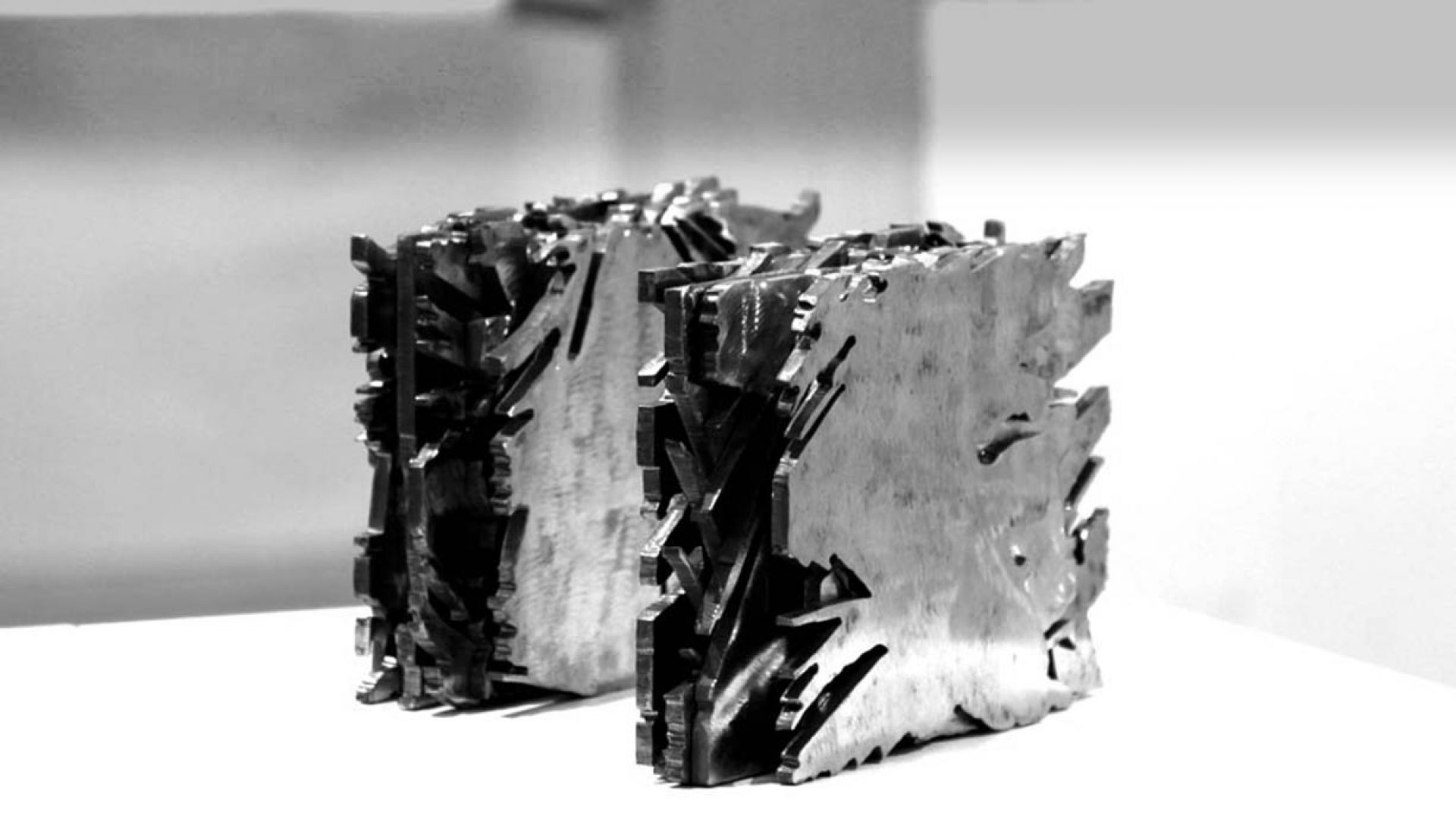
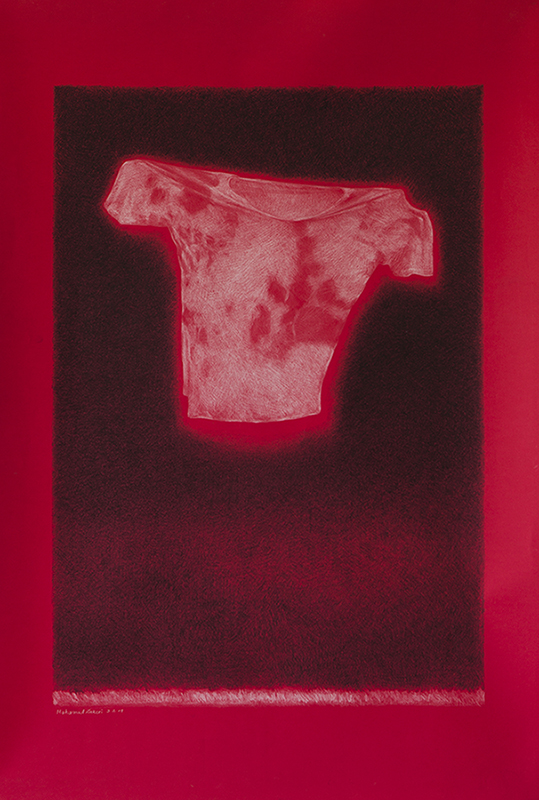
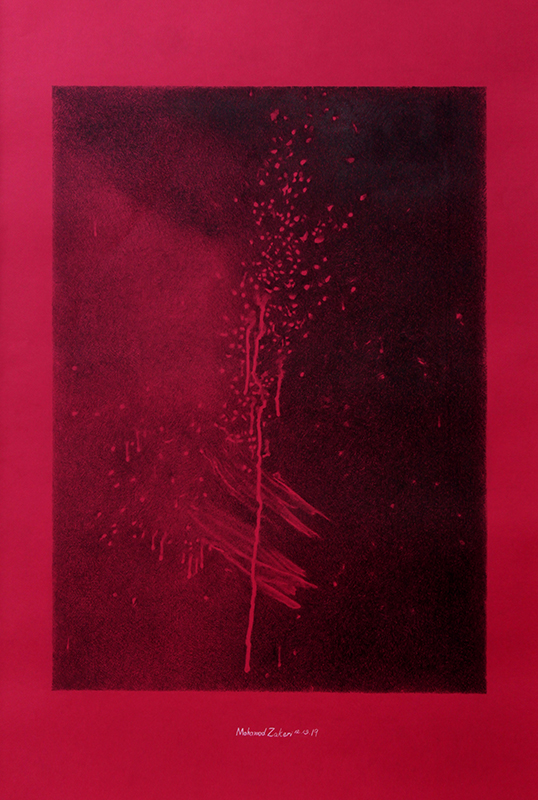
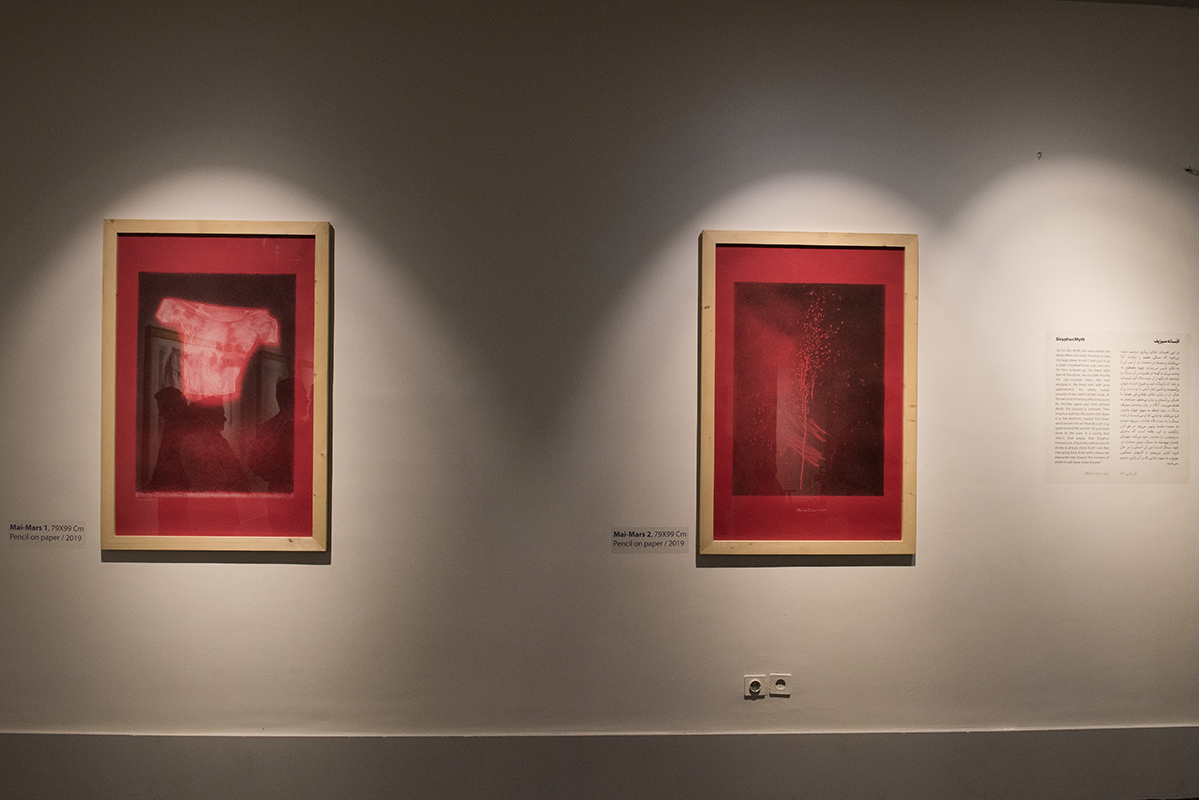
“To the celestial thunderbolts he (Sisyphus) preferred the benediction of water. He was punished for this in the underworld. Homer tells us also that Sisyphus had put Death in chains.”
Albert Camus
Mai-Mars, Mai-Mars, Mai-Mars (in Farsi: Khordad-Tir, Khordad-Tir, Khordad-Tir), Pencil on Paper, 79X99 cm, 2019
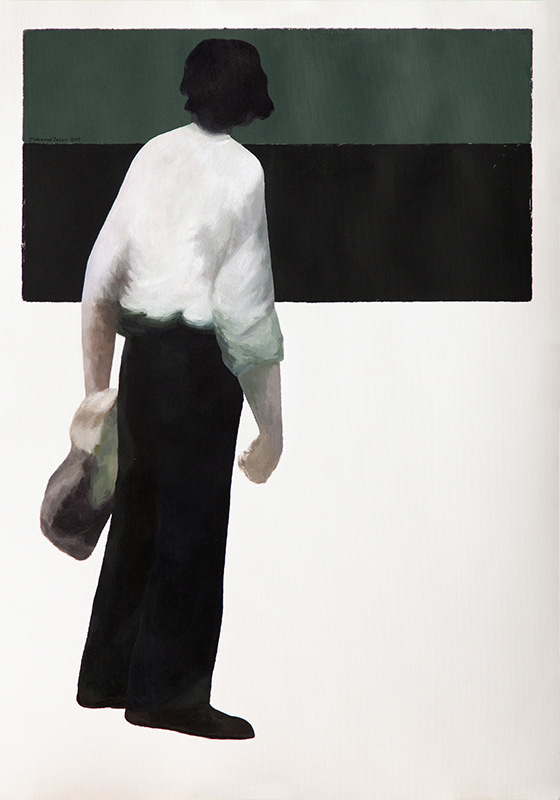
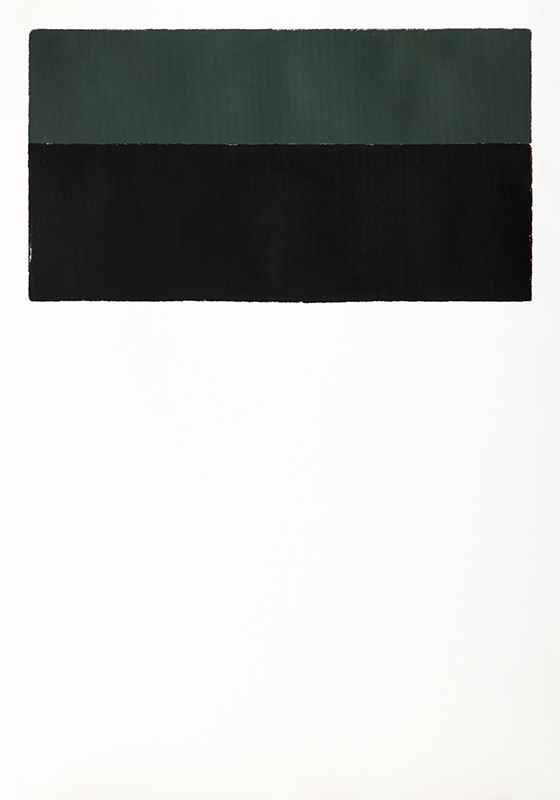
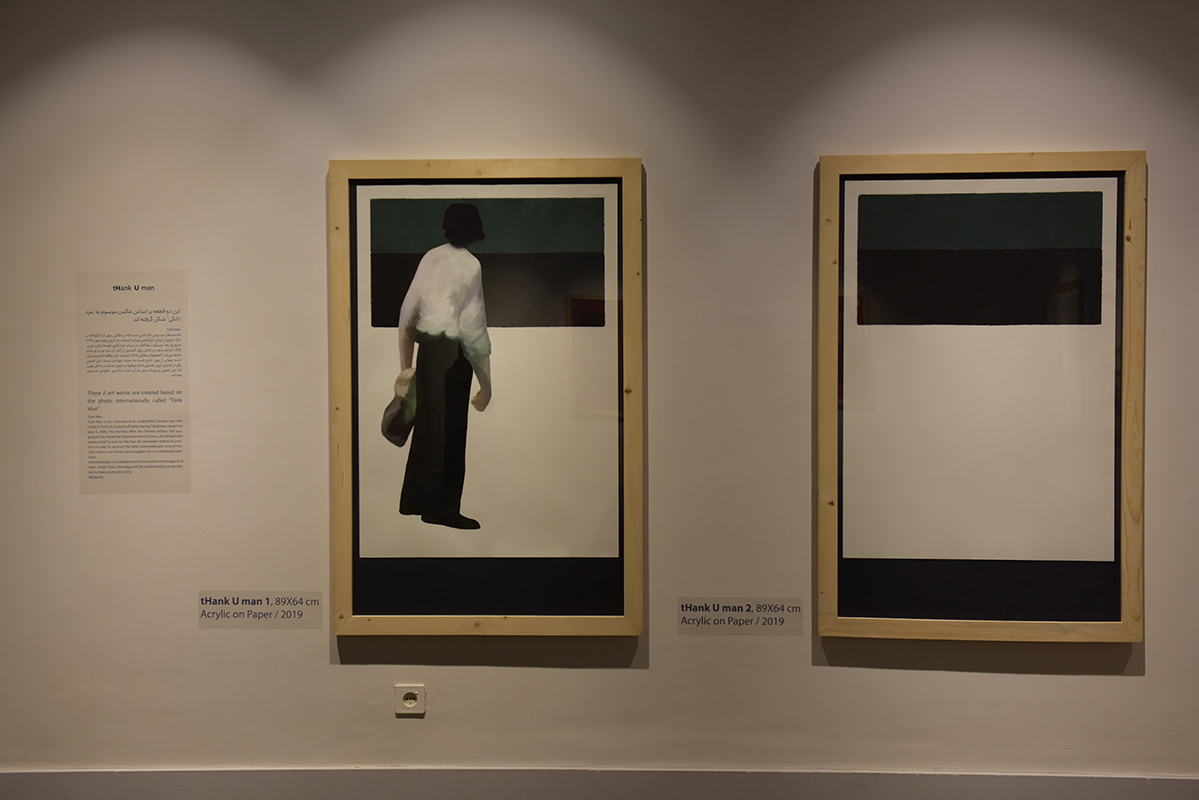
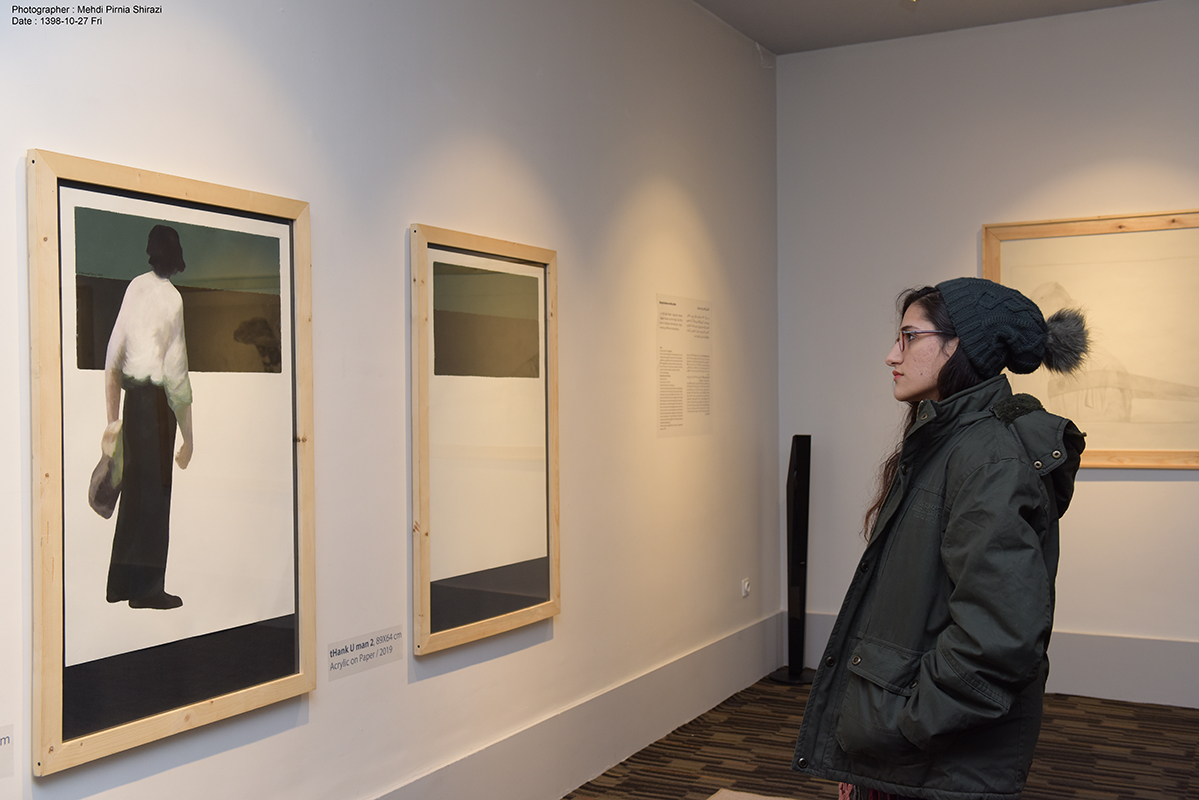
tHank U man, Acrylic on Paper, 89X64 cm (2 Pieces), 2019
These 2 art works are created based on the photo internationally called “Tank Man”.
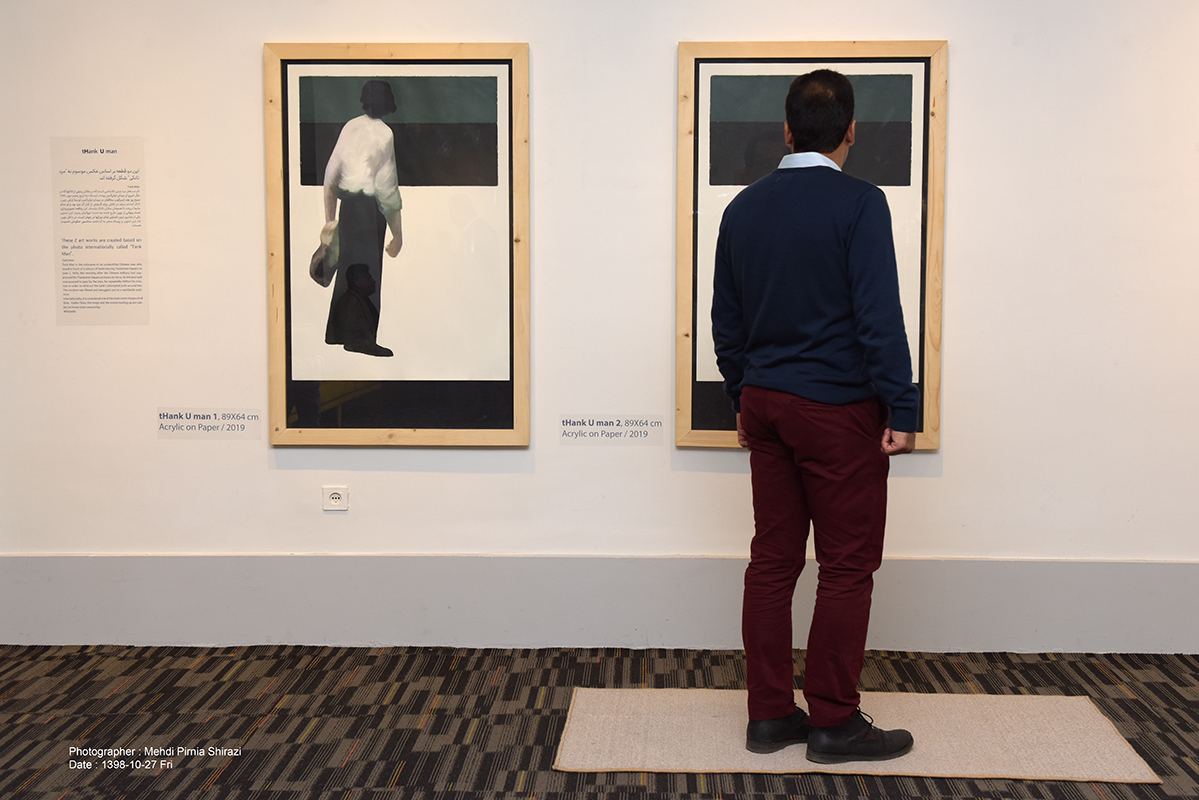
Tank Man
Tank Man is the nickname of an unidentified Chinese man who stood in front of a column of tanks leaving Tiananmen Square on June 5, 1989, the morning after the Chinese military had suppressed the Tiananmen Square protests by force. As the lead tank maneuvered to pass by the man, he repeatedly shifted his position in order to obstruct the tank’s attempted path around him. The incident was filmed and smuggled out to a worldwide audience. Internationally, it is considered one of the most iconic images of all time. Inside China, the image and the events leading up are subject to heavy state censorship.
HU
Hu Yaobang was a high-ranking official of the People’s Republic of China. Hu’s political and economic reforms made him the enemy of several powerful Party elders, who opposed free market reforms and attempts to make China’s government more transparent. A day after Hu’s death, in 1989, a small-scale demonstration commemorated him and demanded that the government reassess his legacy. A week later, the day before Hu’s funeral, some 100,000 students marched on Tiananmen Square, leading to the 1989 Tiananmen Square protests which were a part of the Chinese Democracy Movement. The Chinese government censored the details of Hu’s life within mainland China.